Olympus OM-D E-M10 Mark II vs Panasonic Lumix G7
Every published spec side by side, with today's lowest prices for the market you've chosen.
Key differences
- Announced: Aug 2015 on the E-M10 Mark II, against May 2015 on the Lumix G7.
- Resolution: 16.1 MP on the E-M10 Mark II, against 16 MP on the Lumix G7.
- In-body stabilisation: Yes, 4 stops on the E-M10 Mark II, against No on the Lumix G7.
- Burst (mechanical): 8.5 fps on the E-M10 Mark II, against 8 fps on the Lumix G7.
- Burst (electronic): 11 fps on the E-M10 Mark II, against 10 fps on the Lumix G7.
- Max resolution: 4K on the Lumix G7, against 1080p on the E-M10 Mark II.
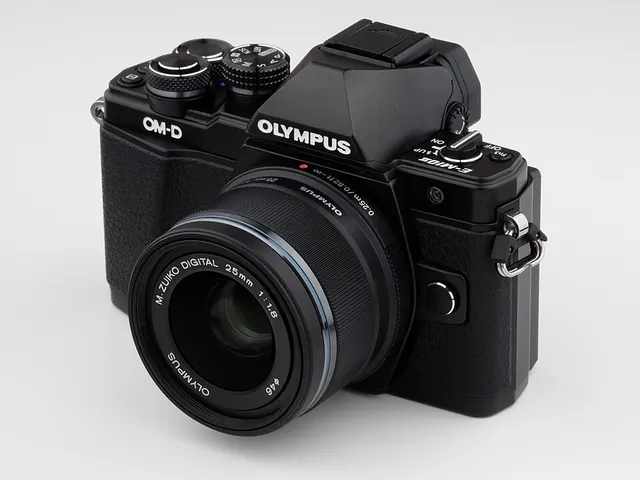 | 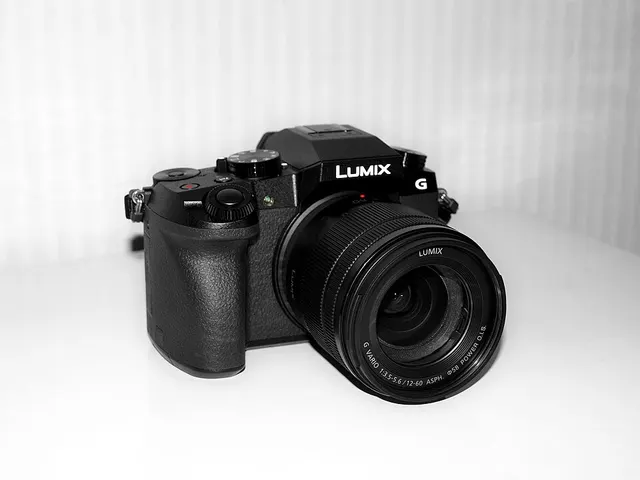 | |
|---|---|---|
| Lowest price today | Not priced in US yet | Not priced in US yet |
| Overview | ||
| Type | Mirrorless | Mirrorless |
| Announced | Aug 2015 (best) | May 2015 |
| US launch priceUS list price when announced, body only. Today's prices are in the offers table. | $649.99 | — |
| Lens | Interchangeable | Interchangeable |
| Sensor & image | ||
| Sensor size | Micro Four Thirds | Micro Four Thirds |
| Sensor type | Live MOS | Live MOS |
| Resolution | 16.1 MP (best) | 16 MP |
| Native ISO | 200–25,600 | 200–25,600 |
| In-body stabilisation | Yes, 4 stops (best) | No |
| Speed & autofocus | ||
| Burst (mechanical) | 8.5 fps (best) | 8 fps |
| Burst (electronic) | 11 fps (best) | 10 fps |
| Fastest shutter (mech.) | 1/4,000s | 1/4,000s |
| Fastest shutter (elec.) | 1/16,000s | 1/16,000s |
| AF pointsMakers count points differently, so this is not ranked. | 81 | 49 |
| Subject detectionMakers group subjects differently (Canon's "animal" includes birds), so only having it is ranked. | Human | Human |
| Video | ||
| Max resolution | 1080p | 4K (best) |
| 4K frame rate | — | 30p |
| 10-bit internal | No | No |
| Internal raw video | No | No |
| Mic input | No | Yes (best) |
| Headphone jack | No | No |
| Viewfinder & screen | ||
| Viewfinder | Electronic, 2.36M dots | Electronic, 2.36M dots |
| Rear screen | 3", 1.04M dots | 3", 1.04M dots |
| Screen articulation | Tilting | Fully articulating |
| Touchscreen | Yes | Yes |
| Body & battery | ||
| Weight (with battery) | 390 g (best) | 410 g |
| Dimensions (W×H×D) | 119.5 × 83.1 × 46.7 mm | 124.9 × 86.2 × 77.4 mm |
| Weather sealed | No | No |
| Battery (CIPA shots) | 320 | 350 (best) |
| Card slots | 1 · SD UHS-II | 1 · SD |
| USB-C | No | No |
| Built-in flash | Yes | Yes |
| Wi-Fi / Bluetooth | Wi-Fi | Wi-Fi |
Green marks the better figure where “better” is unambiguous. A dash means the maker doesn't publish it or we haven't verified it yet.
Low light & noise
E-M10 Mark II
3.7 µm pixels
16.1 MP on a micro four thirds sensor, ISO up to 25,600
Lumix G7
3.8 µm pixels
16 MP on a micro four thirds sensor, ISO up to 25,600
Bigger pixels gather more light each, so they tend to show less noise at high ISO, but sensor design matters as much. For real noise at ISO 6400, these sites measure it:
- Photons to Photos: dynamic range vs ISO ↗Photographic dynamic range measured at every ISO, bodies on one chart
- Photons to Photos: noise vs ISO ↗Read noise at every ISO from lab tests: lower is cleaner in the shadows
- DPReview studio scene ↗The same scene shot by each camera at the ISO you pick, side by side
- DPReview reviews ↗Full reviews with high-ISO samples
- Low-light video tests ↗Real-world high-ISO footage on YouTube
Size, to scale
Front (width × height)
Top (width × depth)